






Blogs
Posted on 01 February, 2026
How Climate and Playing Conditions Influence Sportswear Fabric Choice
Share On:



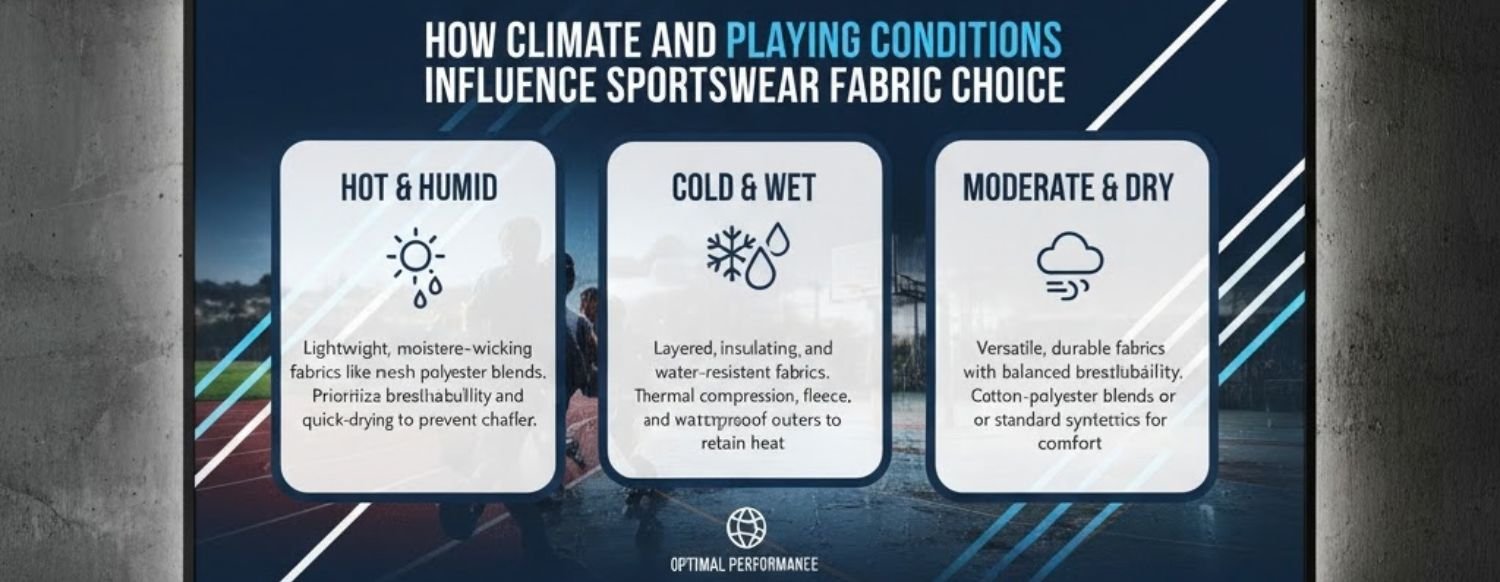
Whenever it comes to choosing the right fabric. Most people ignore one important thing that is not just about comfort or style, it's about performance and recovery and even directly impacts injury prevention. Weather athletes train in scorching deserts, humid tropical climates, or chilly winter conditions. Performance of players also depends upon environmental factors, and fabric technology
And that’s why understanding how climate and playing conditions influence sportswear fabric choice.
Why Fabric Choice Matters in Sportswear?
First of all, sports activities are something that requires an excessive intensity which includes regular running, jumping, quick direction changes and physical contact. with the aid of the usage of that type of energy, players sweat heavily and that’s in which sports clothing fabrics serve a more functional role than regular clothing
And that’s wherein the right fabric comes which allows gamers in regulating frame temperature, and maintains them dry. That is a fabric that works well in one environment may perform poorly in another.
Climate Effects on Fabric Performance
Hot and Arid Climates
In an intense game, the player's body gets heated up quickly and produces a massive amount of sweat. Where temperature is soaring and airflow is minimal, it directly impacts the performance of players. Therefore to maintain a safe core temperature and prevent exhaustion you need clothes which act as a cooling system.
- Lightweight, breathable fabrics; These fabrics help players to move quickly and these also help wick sweat away from the skin fast.
- Moisture wicking technology; These fabrics help to spread sweat over a larger area for quicker evaporation and in result the player's body gets cool and increases their performance.
- Mesh panels and ventilation zones further enhance airflow around the skin
That’s why material with good moisture management like polyester and nylon helps the player by making them feel lighter and comfortable in hot conditions.
Humid Climates
In humid regions where the air already contains a lot of moisture, the sweat evaporates more slowly and cooling is less effective. Players need more clothes which helps to sweat away from their skin. That’s where the moisture wicking fabrics come and with quick drying ability players get the relief and feel lighter which result-increase in performance.
- Moisture wicking fabrics helps a lot but their effectiveness can be reduced because sweat doesn’t evaporate as quickly.
- Losers fitting garments can outperform as compared to tight synthetics because they allow better airflow.
- There are fabrics which are designed with specialized structures to help maintain comfort even in a high humidity.
That’s where the Hydrophobic synthetic fabrics come to push outwards but they can also feel sticky against the skin without good airflow.
Cold and Wet Climates
In cold and wet climates, players need clothes which retain heat, manage moisture, and allow movement so that they can focus only on the games which is one of the most crucial aspects for giving their best.
They need thermal fabrics which retain their body heat
- It’s important to have moisture managing base layers keep skin dry
- That’s why athletes wear synthetic fibers to stay warm when wet and on the other side they wear treated fabrics which block rain and keep them light.
Cold and Dry Climates
In Cold and Dry Climates, as we know the air has very little moisture and because of that the sweat evaporates very quickly from players skin which is good but in cold conditions this evaporation pulls heat away too fast and in result players feel colder than expected. Because of that clothing choice matter,
- Insulating but breathable fabrics
- Brushed fleece or thermal knits
- Compression base layers
Rainy and Windy Conditions
Rainy and Windy conditions are those conditions where players lose their body heat much faster than the normal conditions. They both have different impact on players for example WInd strips helps in away the warm air layer around player skin and while resin cools the body through direct contact and evaporation. Having the right fabrics gives many positive edges. These are the some fabric,
- Windproof fabrics which helps in minimizing heat loss
- Water repellent coatings helps in preventing saturation
- Stretcheable material helps the player to maintain mobility
Indoor and Controlled Environments
Even Indoor and Controlled Environments matters a lot for players. In this environment athletes face unique challenges. Because the temperature and weather are stable, the intense activity generates a lot of body heat which leads them to heavy sweating.
So, in this case they wears,
- Lightweight moisture wicking fabrics which helps them to keep dry
- Odor resistant treatments which helps in improving hygiene
- Stretch fabrics support in their agility and speed
High Altitude Conditions
As it sounds, in these conditions the environment can change quickly. For example the temperature may be warm during the day and drop sharply at night and the thinner atmosphere allows stronger UV radiation to reach the skin. That’s why in this high altitude condition clothes need to be,
- UV protective fabric which works like shield skin
- Breathable layers adapt to changing temperature
- Moisture wicking material which helps them to regulate body heat
Conclusion
For the audience climate and playing conditions is not important but for the players it plays a crucial role in their performance. Any extreme one side climate directly impacts performance by reducing it if they ignore or choose wrong fabrics. Even from extreme heat to freezing cold and high humidity to high altitude environments with the right fabric they can see immediate comfort, improve athletic performance.
Related Blogs
How Stitching Quality Impacts the Durability of Sportswear
Posted on: Feb 01, 2026
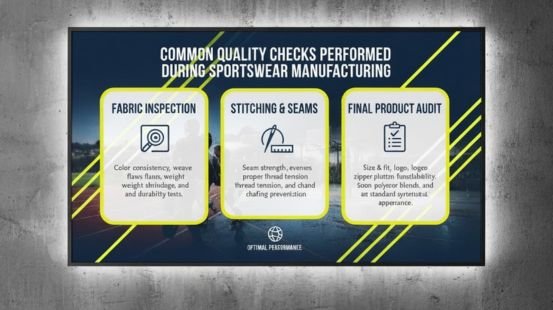
Common Quality Checks Performed During Sportswear Manufacturing
Posted on: Feb 01, 2026
Breathability vs Durability in Sportswear: Finding the Perfect Balance
Posted on: Jan 23, 2026
Which Type of Fabric is Best for Sportswear
Posted on: Jan 22, 2026
FAQ's
Moisture wicking fabrics is important because sweat doesn’t evaporate as quickly which helps a lot but their effectiveness can be reduced.
Polyester and Nylon Fabric, helps the player by making them feel lighter and comfortable in hot conditions.
No Especially in hot or humid conditions, Cotton is mainly unsuitable for intense sports because it absorbs sweat and dries slowly.
In cold weather thermal synthetic moisture wicking base layers paired with insulated outer layers work best in cold environments.
There are many ways of how climate affects athletic performance by influencing body temperature, hydration levels, muscle efficiency, and endurance.





Never miss out on a deal again!
Sign up with your email for exclusive offers, updates, and discounts.