








Blogs
Posted on 01 January, 2026
Polyester vs Spandex Blends: Which Offers Better Flexibility?
Share On:



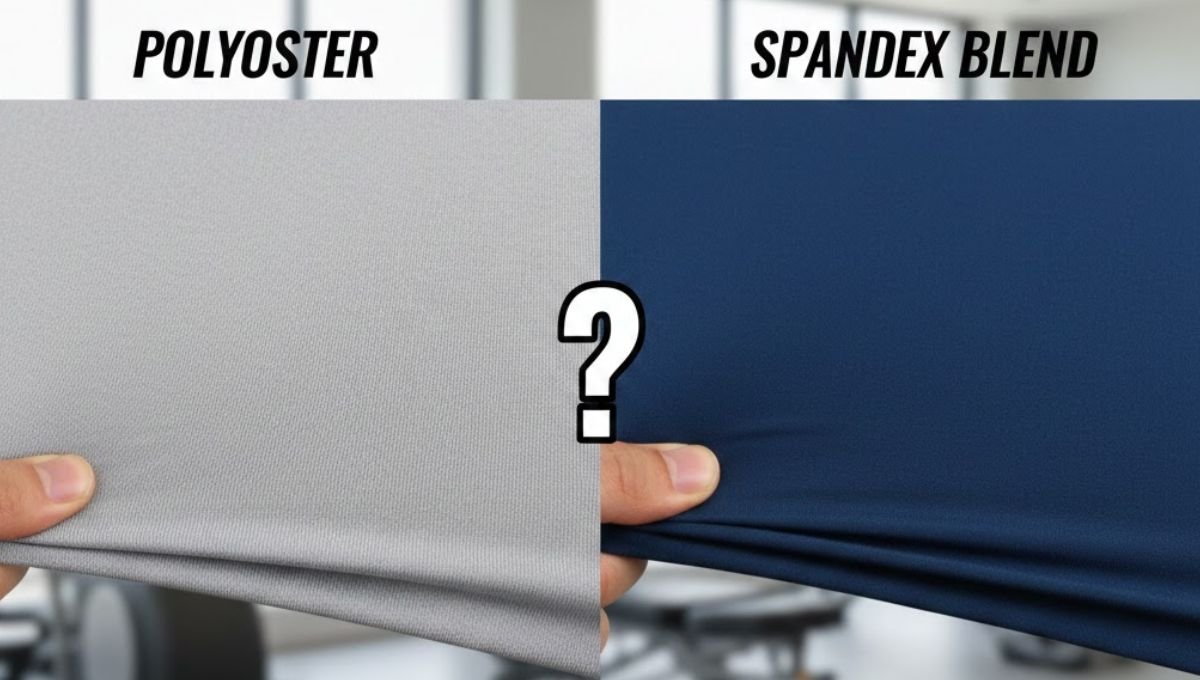
We at SAS APPAREL don’t judge workouts. We judge fabric. Because I’ve been ,there. Mid-squat. Knees bent. Confidence high. And suddenly… my leggings say nope. Tight. Stiff. Zero forgiveness. Game ruined. You can train harder than yesterday, but if what you’re wearing refuses to cooperate, your body pays the price.
I’ve worn enough activewear to learn one truth the hard way: your clothes either flow with you or fight you. And sooner or later, you and I both end up staring at the same clothing tag Polyester. Spandex. They sound technical. They sound premium. But what actually delivers flexibility when your body demands it? Let’s break it down — no fluff, no textbook talk.
Polyester: The Reliable Grinder
Polyester doesn’t show off. It shows up. This fabric is the backbone of modern performance wear, and once you understand why, it makes sense. It’s durable. It dries fast. It shrugs off wrinkles like they don’t matter. You sweat? Polyester deals with it. When I’m pushing through high-rep sets or sprint intervals, polyester is doing its quiet job — pulling moisture away, keeping that sticky, soaked feeling under control. It’s the dependable partner who never misses a session. But here’s where I won’t sugarcoat it for you.
- Polyester alone doesn’t flow.
It moves — but cautiously. Deep lunges, explosive jumps, long yoga holds? It’ll allow them, but without enthusiasm. That’s when things start feeling restricted. And that’s exactly when spandex steps in.
Spandex: Pure Freedom in Fiber Form
Spandex doesn’t negotiate. It expands. This stuff stretches up to five times its original size and snaps right backas ife nothing happened. That’s not hype — that’s engineering. It’s the reason your leggings don’t scream when you drop low or twist into something ambitious. When I wear spandex-rich gear, it feels responsive — almost reactive. Like the fabric knows where I’m headed before I get there. It flexes, adapts, and never argues. But let’s be real with each other. Spandex by itself traps heat. It hates hot washes. And over time, without backup, it loses discipline. That’s why smart brands never let spandex run solo.
Where Things Get Interesting: The Blend
Now we’re talkin'. When polyester and spandex come together, something clicks. Structure meets elasticity. Control meets chaos — in the best possible way. Polyester gives the garment its backbone. On the other hand, Spandex injects movement. At SAS Apparel, we don’t guess these ratios — we engineer them. That 90/10 combo? It eats up tough sessions — sweat dries, fabric moves, and nothing feels stiff. The 80/20 mix? That’s your go-to for yoga flow, deep stretches, and those lazy post-class hangs where comfort wins. Why not go pure with one fabric? Because extremes fail.
- Only polyester feels rigid.
- Only spandex feels suffocating.
Together? They balance each other out. You get stretch without sag. Support without stiffness.Performance that doesn’t fade after a few washes.
Polyester vs Spandex Blends: Which Offers Bettter Flexibility?
Straight answer? Spandex dominates flexibility. No contest. But flexibility alone doesn’t equal comfort or performance. You don’t train in isolation — you sweat, you heat up, you move fast, you recover. That’s why blended fabrics win in the real world. They bend when needed, breathe when required, and recover shape after every movement. Spandex creates freedom. Polyester controls it And that control is what keeps your gear feeling new instead of sloppy.
Choosing the Right Blend for Your Movement
I’ll make this simple for you — match fabric to intent. When you are doing heavy training, cardio, or strength training, go with polyester-heavy; they will help you to stay cooler, drier, and locked in. On the other hand, if you want mobility work, yoga, dance, or slow flow sessions, your best blend is one that has more spandex because your body needs space to expand. Every day wear after workouts?
Stick with balanced blends that breathe, resist wrinkles, and don’t scream “gym clothes.”When the material mirrors how you move, everything feels natural. You don’t think about adjustments. You just move.
Keeping Your Gear Alive (Because Mistakes Kill Stretch)
I see people destroy premium gear in weeks — not because it’s bad, but because it’s abused. Here’s how I protect mine:
- Cold washes only — heat murders elasticity
- Skip fabric softeners — they choke moisture control
- Air drying beats dryers every time
- Flip garments inside out before washing
- Never iron performance wear (seriously)
- Do this, and your clothes will outlast your training cycles.
Why SAS Apparel Builds This Way?
We don’t design for mirror selfies. We build for movement. Every SAS Apparel blend is tested under real conditions — sweat, stretch, repetition, recovery. The fabric doesn’t fight you — it flows with you. Jumps, stretches, sprints… it just follows your lead and locks in when it counts. You shouldn’t have to think about your outfit while you’re owning the moment.
Conclusion
Your body doesn’t move in straight lines — and your fabric shouldn’t either. Polyester-spandex blends aren’t just materials stitched together. They’re a partnership between control and freedom. Once you feel that smooth stretch that never pushes back, going backward isn’t an option.
Related Blogs
A Complete Guide to Sportswear Fabrics for Hot Climates
Posted on: Dec 30, 2025
Differences Between Athletic Fit and Regular Fit in Sportswear
Posted on: Dec 30, 2025

Custom vs Ready-Made Jerseys: Which Offers More Value
Posted on: Dec 30, 2025
FAQ's
Polyester plays defense. It fights sweat, survives friction, and dries before you notice you’re wet. Spandex plays offense — twisting, expanding, rebounding as your body shifts. One controls the climate. The other obeys motion.
Spandex doesn’t stretch — it teleports. Five-times expansion, instant recovery, zero memory loss. Polyester stays grounded, watching from the sidelines.
Individually, they’re incomplete. Together, they’re engineered. Polyester stabilizes the structure; spandex injects mobility. The result isn’t compromise — it’s balance.
When speed, impact, and sweat collide, 90/10 dominates. Air moves freely. Moisture vanishes. Shape stays locked, no matter how aggressive the session gets.
Keep it cold. Avoid chemicals that coat fibers. Let the air finish the job. Heat doesn’t fade spandex — it erases it.





Never miss out on a deal again!
Sign up with your email for exclusive offers, updates, and discounts.